inteligenai-admin

What happened when an AI Agent hacked another AI chatbot?

Autonomous AI agents operate at machine speed. When deployed for offensive security testing, they discover and exploit legacy software flaws significantly faster than human operators. A recent breach of a major enterprise AI platform demonstrates that traditional security perimeters are no longer sufficient to protect modern AI architectures. In March 2026, the security testing startup […]

What happened when an AI Agent hacked another AI chatbot? Read More »

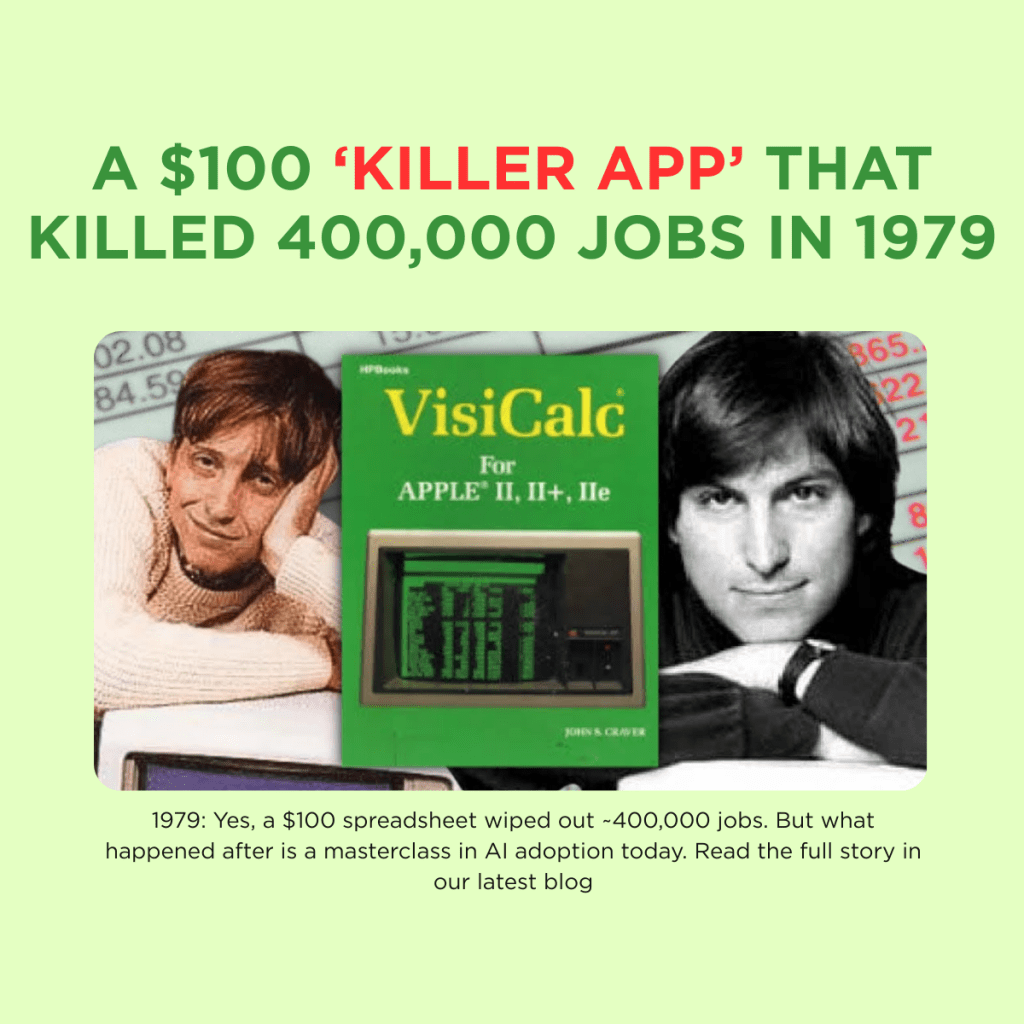
What the $100 Killer App of 1979 Teaches Us About AI Adoption in 2026

Before 1979, every business depended on a back office most people never saw. Rows of accounting clerks, heads down, pencils moving across 13-column ledger paper. Work moved like an assembly line — one person responsible for one column’s worth of calculations, then passing it to the next. Change a single cost assumption, revise one revenue

What the $100 Killer App of 1979 Teaches Us About AI Adoption in 2026 Read More »

AI in Proctoring: Pros, Cons, and Enterprise Strategies

With remote high-stakes assessments surging nearly 300% in the post-2025 landscape, a critical question faces every Chief Learning Officer: Can AI truly match—or even surpass—human vigilance? As global markets like India, the USA, and the UK shift toward decentralized work and education, the traditional exam hall is being replaced by digital environments. Today, over 80%

AI in Proctoring: Pros, Cons, and Enterprise Strategies Read More »

Reducing halluciantions in document AI

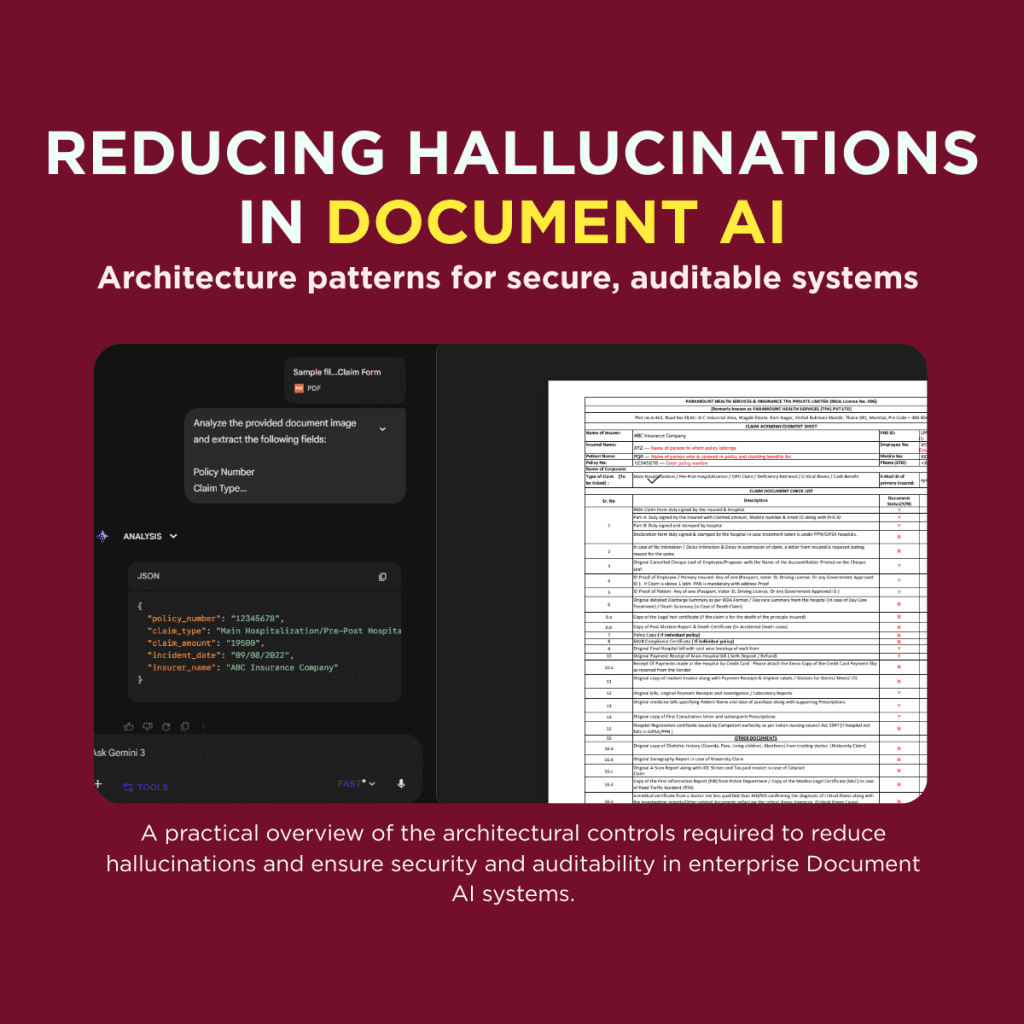
Document AI architecture for enterprises: Hallucination mitigation, security, and auditability

Enterprise Document AI architectures are rapidly evolving beyond traditional OCR toward Vision Language Models (VLMs) and agentic AI systems that can interpret complex layouts, reason over multimodal inputs, and automate end-to-end document workflows. While these approaches unlock significantly higher accuracy and automation, they also introduce new architectural failure modes that are especially critical in enterprise

Document AI architecture for enterprises: Hallucination mitigation, security, and auditability Read More »

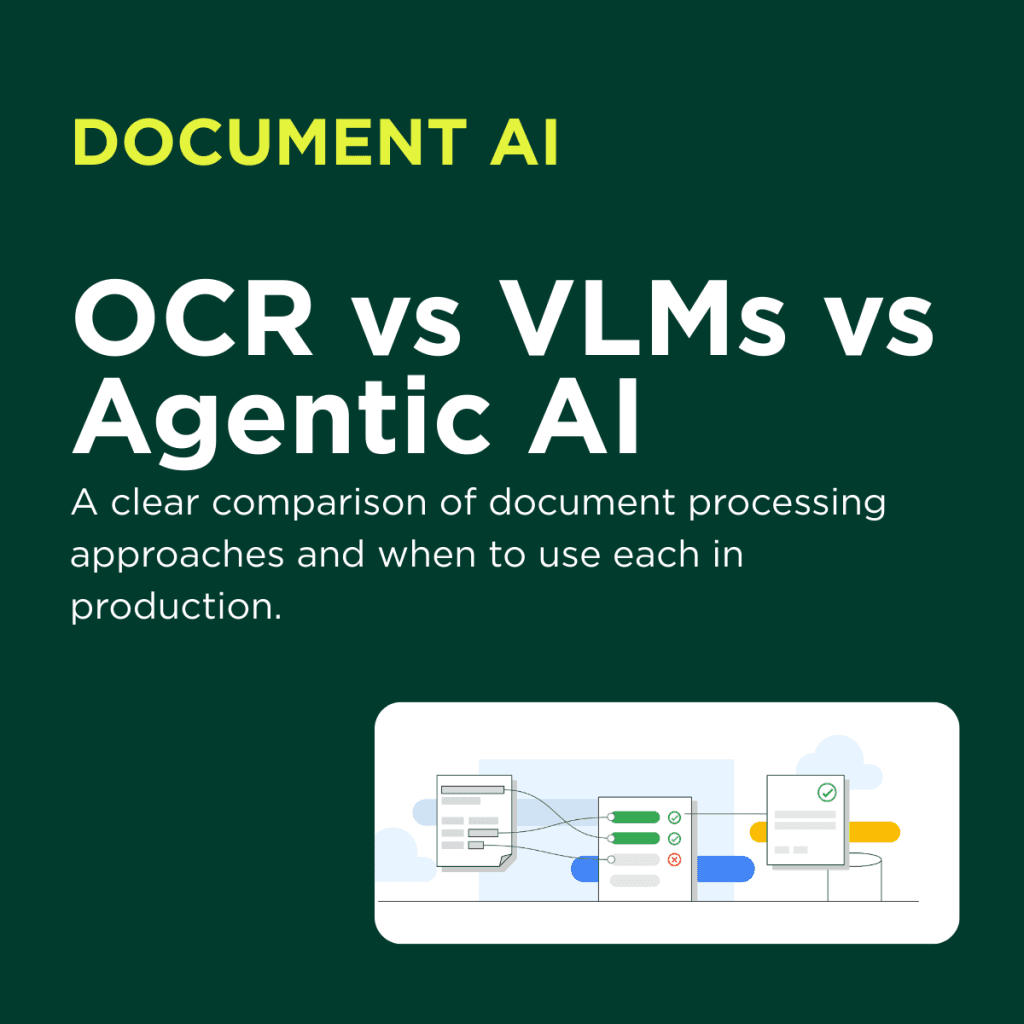
OCR vs VLMs vs Agentic AI

Best document AI approach in 2026: OCR, VLMs, or Agentic Systems?

For the last decade, the objective of document processing was simple: Digitization. The goal was to transform physical paper into digital characters. Today, that objective is obsolete. The new imperative is Intelligent understanding. It is no longer enough to extract a string of text; systems must now interpret that text as structured, actionable data. They

Best document AI approach in 2026: OCR, VLMs, or Agentic Systems? Read More »

Top agentic AI use cases in Banking & Insurance (with business impact metrics)

Top Agentic AI Use Cases in Banking & Insurance

Most banks and insurers are no longer experimenting with AI. They already have chatbots, OCR pipelines, risk models, and fraud classifiers in production. Yet operational costs remain high, cycle times remain slow, and human bottlenecks still dominate critical workflows. Traditional AI systems are good at individual tasks. Financial services, however, are dominated by multi-step, cross-system,

Top Agentic AI Use Cases in Banking & Insurance Read More »

How to optimize RAG for sub-second latency?

How to optimize RAG for sub-second latency?

Scaling RAG pipelines from a prototype to a production system handling thousands of queries per second (QPS) reveals a harsh reality: default configurations rarely meet sub-second service level agreements (SLAs). Achieving consistent low latency at scale requires a fundamental shift in perspective. Speed is not merely a function of a faster vector database. Instead, latency

How to optimize RAG for sub-second latency? Read More »

Chunking strategies for tabular data

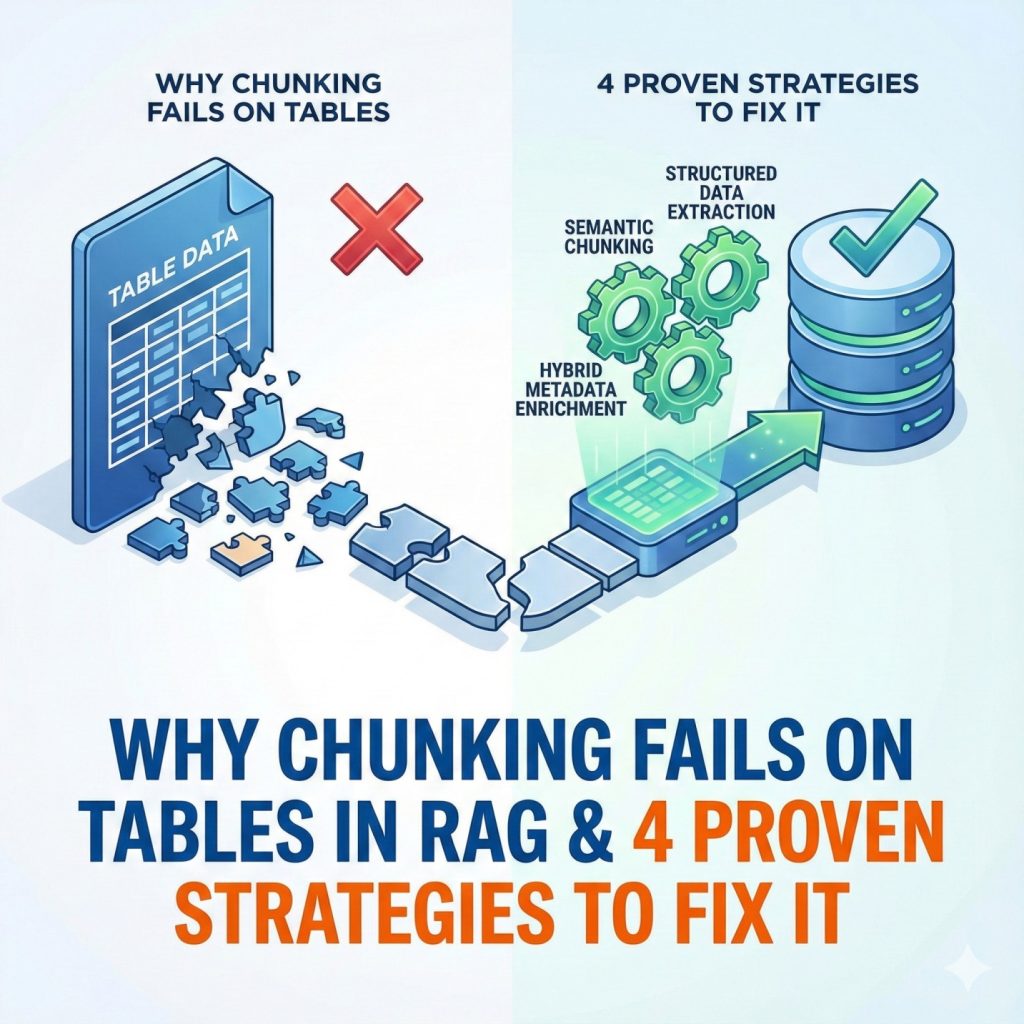
Why chunking fails on Tables in RAG, & 4 proven strategies to fix it

In this blog, we break down why standard chunking fails for structured data and how to design table-preserving chunking strategies using modern RAG best practices. Each approach comes with implementation guidance, use cases, and architecture fit. Why chunking fails on tabular data? Tables aren’t text — they are relational knowledge graphs compressed into rows and

Why chunking fails on Tables in RAG, & 4 proven strategies to fix it Read More »

Multi agent architecture

LatentMAS explained: A new architecture for faster multi-agent AI systems

If you’ve ever built or evaluated multi-agent LLM systems, you’ve hit the same bottleneck:agents collaborate by dumping text back and forth. This works, but comes with structural problems: LatentMAS proposes a fundamentally different inter-agent communication model:skip the token channel completely and operate directly in latent space. Below, we break down its architecture, performance characteristics, practical

LatentMAS explained: A new architecture for faster multi-agent AI systems Read More »